“Alarming, to say the least.”
I decided to do some research on just how many people, just like me, if not younger are affected by mental health disorders. Here are some of my findings. Warning for some, this may be distressing.
Approximately 278,000 young people, between the ages of 4-17 (that’s right, even 4-year-olds) experienced an anxiety disorder in 2015. Now it’s 2018 I could only imagine that this number has spiked drastically. In this research, an anxiety disorder is one or more of the following: Panic disorder, Agoraphobia (A person with agoraphobia is afraid to leave environments they know and consider to be safe for fear of having anxiety or a panic attack), Social Phobia, Obsessive-compulsive Disorder and PTSD (Post Traumatic Stress Disorder).
Let’s just make sure we’re seated for this one because you’re about to find out that suicide is the biggest KILLER of young Australians and accounts for the deaths of more young Australians than car accidents. As unbelievable as that is, the number of deaths by suicide among young Australians is the highest its ever been in ten years.
Only 25% of young Australians who felt any type of suffering or mental health disorders occurring, sought out any form of help. The top two places recorded that young Australians approached for help were school counsellors and their family doctor, followed by other private healthcare professionals and community health services. These statistics included children of only 4 years old. The youth of 13-17 year olds were more likely to approach someone than those of the 4-12-year-old age bracket.
I wanted to know why so many young Australians weren’t asking for help, so I found the following table outlining why according to a study conducted by the University of Adelaide.
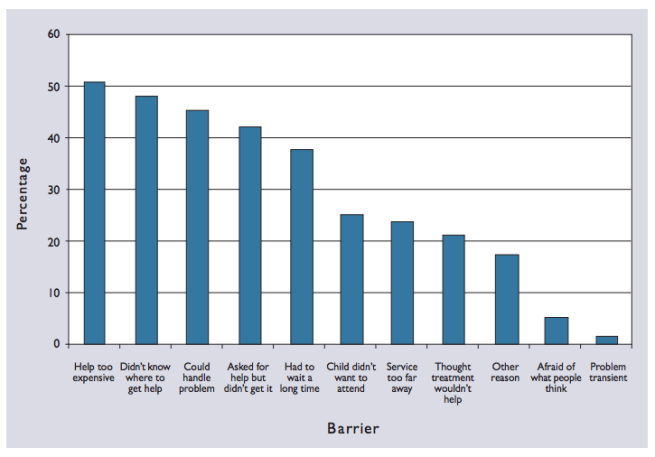
What’s shocking to see is asking for help but didn’t receive it, is in the top 5. The number one reason was that the help for their mental illness was too expensive, followed by not knowing where to get help, and thinking they could handle it themselves.
So what does someone do if they feel affected by their mental health? Australians can call 13 11 14. This is the number for LifeLine and you can visit their website here. Lifeline is a 24-hour crisis support and suicide prevention line.
Calling lifeline will give you access to immediate support, a listening ear, help to rationalise your options and situation. Always remember as with any phone line that you may be on hold for a few minutes when in high demand, but each person who calls is taken care of. They will refer you to someone local who can give you ongoing support to see out that you continue to get the help you need.
If you would prefer not to speak to someone but to find a service locally to you on your own, you can use their directory here.
There are bulk billing options available and you can also talk to your GP about a mental health plan which gives you access to a mental health specialist.
You need to stop ‘self-diagnosing’. This is doing you more damage than good. Without speaking to a healthcare professional, you will not know what mental health disorder/s you have and need to treat. Trying to treat depression yourself when you have anxiety will not get you anywhere you need to be. Get diagnosed properly and seek the appropriate help.
If you are experiencing any form of mental health disorders, please seek help. Help is always available to you. You are important.
 Counselling and Advice with Ashlee